
Near you, no matter where you are.
Appointed Representative of The Right Mortgage Network (FCA No. 1004260). Company No. 15189091. Registered in England and Wales.
What life insurance actually is and how it works. The different types of policy and which one suits you. How much life insurance costs in the UK in 2026. What affects the price you are quoted. Whether you need life insurance when you have a mortgage. How to make sure your policy actually pays out. How to get the right cover without overpaying.

Mar 9, 2026

Life insurance is one of those things most people know they probably need, but keep putting off. The good news is that it is simpler than you think, cheaper than you expect, and getting it sorted takes far less time than you imagine.
This guide covers everything you need to know before buying life insurance in the UK in 2026. It is written in plain English, with real costs, honest advice, and no jargon.
Life insurance is a policy that pays out a tax-free lump sum to your loved ones if you die during the term of the policy. You pay a monthly premium, and in return, your insurer agrees to pay a set amount of money to whoever you choose if you pass away while the policy is active.
The money can be used for anything: paying off a mortgage so your family keeps their home, replacing your income so your partner or children can cover day-to-day costs, paying for childcare or school fees, or simply giving your family breathing room during an incredibly difficult time.
In 2026, UK life insurers paid out over £5.3 billion in individual protection claims, with 97% or more of all claims accepted across major providers. That means for every 100 claims made, 97 were paid. The main reason claims are refused is non-disclosure, which means the policyholder was not honest about their health or lifestyle on the application. As long as you are completely honest when you apply, the chances of a payout are extremely high.
The lump sum paid out from a life insurance policy is free of income tax and capital gains tax. However, if the payout forms part of your legal estate, it may be subject to Inheritance Tax. Writing your policy in trust avoids this completely and is free to set up. Ask us about this when you get a quote.
Not everyone needs life insurance. If you have no dependants, no mortgage, and enough savings to cover your funeral costs and any debts, you may not need a policy. But for most people, especially those with a mortgage, a partner who relies on their income, or children, life insurance is one of the most important financial products you can have.
Ask yourself this: if you died tomorrow, would the people you love struggle financially? If the answer is yes, you need life insurance.
A report from the FCA published in early 2026 found that 58% of UK adults have no life insurance or protection policy at all, despite many having a clear financial need for one. The most common reason is simply that people have not got around to it or do not realise how affordable it is.
The average cost of a decreasing term policy to protect a mortgage is around £16.58 per month. That is less than a takeaway. For first-time buyers getting a mortgage, it is one of the most straightforward pieces of protection you can put in place.
There are three main types of life insurance in the UK. Understanding the difference will help you choose the right one for your situation.

This is the most common type. You choose a fixed payout amount, such as £250,000, and a fixed period, such as 25 years. If you die within that period, your insurer pays the full amount. If you survive the term, the policy ends with no payout.
It is ideal for covering an interest-only mortgage, replacing lost family income, or providing a financial cushion for children growing up.
This works in the same way as level term, except the payout amount reduces over time, broadly in line with a repayment mortgage balance. Because the insurer's risk reduces each year, it is usually the cheapest type of life insurance available.
It is the most popular choice for people buying it specifically to protect a repayment mortgage, and is often the policy recommended alongside a residential mortgage.
This policy does not have an end date. It stays in force for your entire life, and a payout is guaranteed whenever you die. Because the insurer will definitely have to pay out at some point, the premiums are significantly higher than term policies.
It is typically used for inheritance tax planning, covering funeral costs, or leaving a guaranteed sum to loved ones as a legacy. It is not usually the right product for straightforward mortgage protection.
If you have a repayment mortgage, a decreasing term policy is usually the most cost-effective way to protect it. If you want to cover your family's income and lifestyle as well, level term gives you a fixed payout to cover anything. If you are older and thinking about inheritance tax or funeral costs, whole of life is worth exploring. Not sure? That is exactly what our advisers are here for.
This is the question that stops most people from acting. The reality is that life insurance is far more affordable than most people assume, particularly for younger, healthier people.
Here are real illustrative monthly costs for level term life insurance with £250,000 of cover over a 25-year term, for non-smokers and smokers in good health:

The most important thing this table shows is the difference age makes. A 25-year-old can get £250,000 of cover for around £8 a month. By the time they are 40, the same cover costs over three times as much. The best time to take out life insurance is always as early as possible, because premiums are locked in at your age on the day you apply.
In terms of averages across the whole market in 2026, level term life insurance costs around £25.05 per month, decreasing term costs around £16.58 per month, and whole of life averages around £102 per month.
The average cost of life insurance for mortgage protection specifically, based on the average UK outstanding mortgage debt, is around £16.58 per month for a non-smoker. For a couple buying their first home together, a joint decreasing term policy can often be arranged for around £12 per month.
Your premium is calculated based on the risk an insurer takes on when they cover you. The bigger the risk, the higher the premium. Here are the key factors:
The single biggest factor. The younger you are, the cheaper your cover will be. Every year you wait makes the same cover more expensive. A 35-year-old can expect to pay around half what a 45-year-old pays for identical cover.
Smokers pay significantly more for life insurance. On average, a smoker pays around double what a non-smoker pays. This includes vaping and any nicotine products. To be classified as a non-smoker by an insurer, you typically need to have been completely nicotine-free for at least 12 months.
If you have recently quit smoking, this is one of the most financially rewarding things you can do. After 12 nicotine-free months, you can reapply as a non-smoker and your premiums could be cut dramatically.
Insurers will ask about your height, weight, blood pressure, and any pre-existing conditions. Having a health condition does not mean you cannot get cover. It may mean your premium is slightly higher, or that certain conditions are excluded. A specialist broker can help match you to the insurer most likely to offer the best terms for your specific health profile.
A history of hereditary conditions such as heart disease or certain cancers in close relatives before the age of 60 or 65 may affect your premium. Again, this does not mean you will be refused. It simply means the insurer factors in a slightly higher risk.
A desk-based job presents a low risk. Jobs involving manual labour, working at heights, or hazardous environments may attract a higher premium. The armed forces and certain other high-risk occupations are assessed individually.
The more money you want the policy to pay out, and the longer you want the cover to last, the higher your premium will be. Getting the right amount of cover is important; too little leaves your family exposed and too much means you are paying for protection you do not need.
Honesty is non-negotiable on a life insurance application. Withholding information about your health, smoking status, or family medical history to get a cheaper premium could result in your policy being cancelled or a claim being refused at the worst possible time. Always disclose everything truthfully.
You are not legally required to have life insurance to get a mortgage in the UK. However, lenders strongly recommend it, and most mortgage advisers will discuss it with you as part of the mortgage process. There is a very good reason for this.
If you die with an outstanding mortgage and no life insurance, your family inherits the debt. Depending on the mortgage size and your family's income, that could mean they have to sell the home. A decreasing term life insurance policy is designed specifically to cover a repayment mortgage and is usually the most affordable way to ensure this never happens.
For first-time buyers, taking out mortgage protection at the same time as your mortgage means you are covered from day one. It is also usually slightly cheaper to arrange at the point of purchase, as you are typically younger and in good health.
Chloe and Liam, both 28, buy their first home with a £250,000 repayment mortgage over 30 years. Both are non-smokers in good health. They take out a joint decreasing term life insurance policy for £250,000 over 30 years. Their combined premium is approximately £12 per month. That is less than a monthly streaming subscription for the peace of mind that their home is protected.
When two people share a mortgage or financial commitments, they can either take out a joint policy covering both of them, or two separate individual policies.
A joint policy is usually around 10% to 25% cheaper than two individual policies. It covers both people under one policy but only pays out once, on the first death. After that payout, the policy ends, leaving the surviving partner with no cover.
Two individual policies cost slightly more overall, but each pays out independently. If one partner dies, their policy pays out and the surviving partner's policy remains active. For families with children, this is often the better long-term option despite the slightly higher cost.
The right answer depends on your ages, your financial situation, and whether you have children. Speak to an adviser and they can run the numbers for both options.
This is one of the most important and least talked-about aspects of life insurance, and most people have never heard of it.
When you write your life insurance policy in trust, you are placing the policy outside of your legal estate. This means two important things:
Writing your policy in trust is free in most cases and takes around 20 minutes to complete. Most insurers provide a simple trust form. This is something our advisers can help you set up at no extra cost.

Yes, in most cases. Having a health condition does not automatically mean you cannot get life insurance. Millions of people in the UK have life insurance with diabetes, high blood pressure, a history of cancer, mental health conditions, and many other medical issues.
What it means in practice is that different insurers will assess your condition differently. Some will cover you at a standard rate, some may apply a slightly higher premium called a loading, and some may exclude claims specifically related to that condition.
This is exactly where using a broker makes a significant difference. A whole-of-market broker knows which insurers are most likely to offer favourable terms for specific conditions. Going direct to one insurer and being declined or quoted a high rate does not mean the same applies everywhere.
Even if you have been declined for life insurance before, it is worth speaking to an adviser. The market is broad and different insurers specialise in different risk profiles. Getting declined by one provider does not close the door on cover.
The most common question, and the answer depends entirely on your situation. There is no one-size-fits-all figure. However, here is a practical starting point:
Your cover amount should match your outstanding mortgage balance. A decreasing term policy does this automatically as the cover reduces in line with your repayment balance.
A widely used rule of thumb is 10 times your annual salary. So if you earn £35,000, you would consider cover of around £350,000. This gives your family roughly 10 years to adjust their finances, pay off debts, and maintain their standard of living.
Add together your outstanding mortgage balance and the income replacement figure above. For example, a mortgage of £220,000 and a salary of £35,000 would suggest total cover of around £570,000, split across one or two policies if needed.
These are guidelines, not rules. An adviser will sit down with you, look at your actual outgoings, your savings, any employer death-in-service benefits you already have, and help you arrive at a figure that genuinely covers your family without you paying for cover you do not need.
The lump sum itself is free of income tax and capital gains tax. However, if the payout forms part of your estate and your estate exceeds the Inheritance Tax threshold of £325,000, a 40% tax charge may apply to the amount above that threshold. Writing your policy in trust removes this risk entirely and is free to arrange.
For most straightforward applications, you can get a quote and have a policy in place within a day or two. If you have a pre-existing health condition or the insurer requests a GP report, it can take two to eight weeks. An adviser can help speed this up by knowing which insurers have the fastest underwriting processes for your situation.
Yes. You can have multiple life insurance policies in the UK. Some people have a policy through their employer as part of a death-in-service benefit, and take out additional personal cover on top. Others hold two separate policies for different purposes, such as one to cover the mortgage and another to protect family income.
If you miss payments, most insurers will give you a short grace period. After that, the policy will lapse and you will no longer be covered. Unlike whole of life policies, term policies do not build up any cash value, so there is no refund if the policy lapses. If your circumstances change and you are struggling to afford premiums, speak to your insurer or adviser before stopping payments.
Most UK life insurance policies include suicide in their terms after an initial exclusion period, which is typically 12 to 24 months from the start of the policy. After this period, the policy would pay out if a claim were made. Check your specific policy wording and speak to your adviser if you need clarity.
In most cases, yes. UK life insurance policies generally provide worldwide cover. However, if you moved abroad permanently or worked in a country on an insurer's exclusion list, there may be conditions. Always check your policy documents and inform your insurer of any significant change in circumstances.
Yes. You can cancel a term life insurance policy at any time. There are no exit fees, but you will not receive a refund on premiums already paid and your cover ends immediately. If you are considering cancelling because of cost, it is worth speaking to an adviser first as there may be ways to reduce your premium rather than losing cover altogether.
Terminal illness cover is included as standard in almost all UK term life insurance policies at no extra cost. It allows the policy to pay out early if you are diagnosed with a terminal illness and a medical professional confirms you have less than 12 months to live. This is different from critical illness cover, which pays out on diagnosis of a specific condition regardless of life expectancy.
Getting the right life insurance does not have to be complicated. Our advisers are FCA-regulated, whole-of-market, and will take the time to understand your situation before recommending anything.
Whether you are taking out a mortgage and want protection alongside it, you are reviewing your existing cover, or you are simply starting from scratch, we are here to help.

Getting a mortgage right now feels harder because lenders keep changing their rules, but most of the barriers people face can be fixed. A “no” from one lender does not mean you cannot get a mortgage. Income rules vary, credit score rules vary, and each lender calculates affordability differently. A good broker checks everything upfront, matches you to the right lender, and fixes issues before they become problems. If you want to know what you can borrow without guessing, speak to MBNM.
Read Article
An Agreement in Principle (AIP) is a quick affordability check that helps you house-hunt with confidence. This guide explains what an AIP is, how lenders assess you, whether it affects your credit score, how long it lasts, and how to get one the right way without tripping yourself up.
Read Article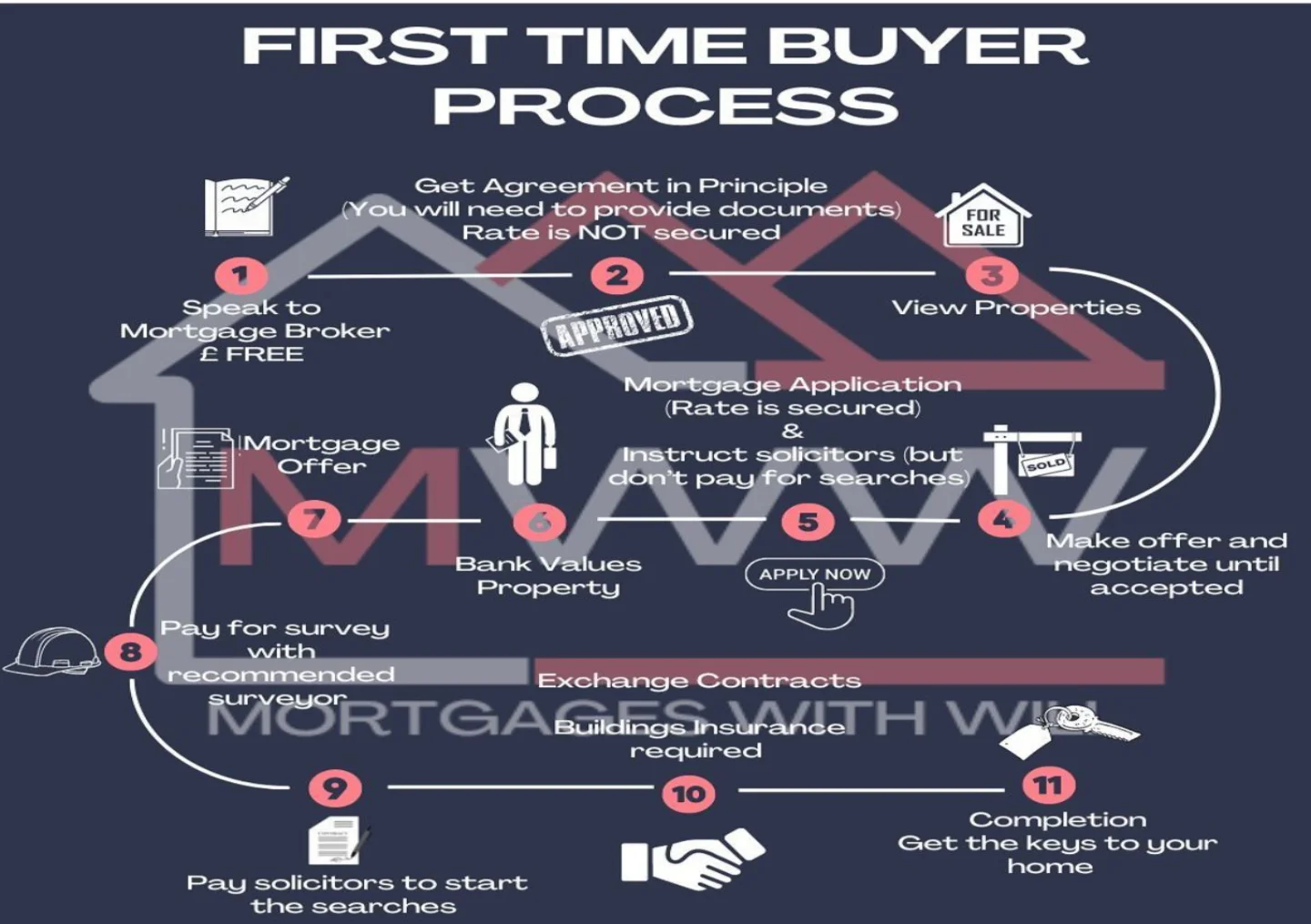
A clear, step-by-step guide to the first-time buyer process, written by Will Sharman of Mortgage Brokers Near Me. Learn what happens at each stage and when to get expert help.
Read ArticleIf you’re buying, moving, or remortgaging, speak with a MBNM adviser and get clear guidance on what’s realistically available to you, before you commit to anything.
Near you, no matter where you are.
Appointed Representative of The Right Mortgage Network (FCA No. 1004260). Company No. 15189091. Registered in England and Wales.


