
Near you, no matter where you are.
Appointed Representative of The Right Mortgage Network (FCA No. 1004260). Company No. 15189091. Registered in England and Wales.

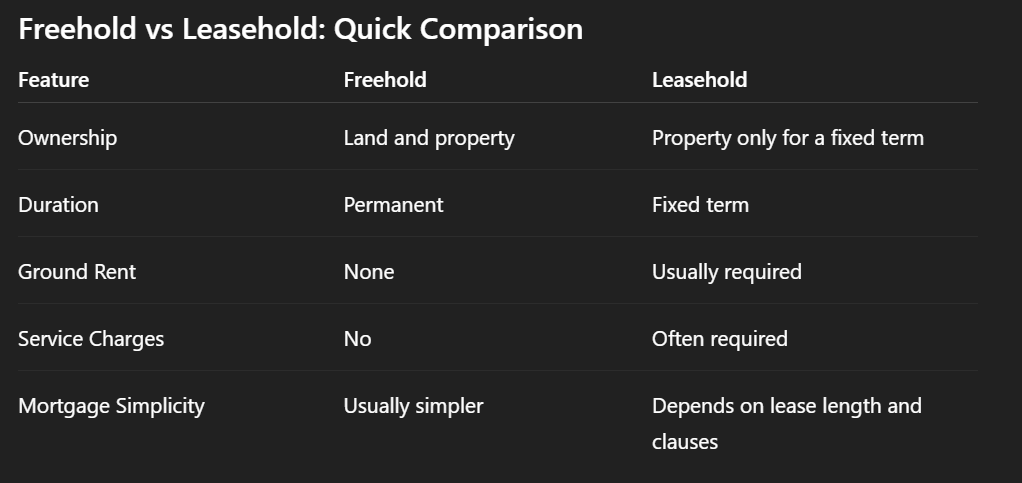
Tenure explains how you legally own a property. Freehold means you own the building and the land outright. Leasehold means you own the property for a fixed period but not the land. The difference affects mortgage eligibility, resale value and long-term costs. If you are buying or remortgaging, tenure is not just legal jargon. Lenders care about it. A short lease, ground rent clauses or restrictive terms can limit which lenders will consider your application. This guide explains what tenure means in plain English and how it affects your mortgage.

Feb 16, 2026
.webp)
Tenure is the legal way in which a property is owned.
In England and Wales, the main types of tenure are:
Each type gives you different rights, responsibilities and costs.
Freehold means you own the property and the land it stands on indefinitely. There is no expiry date.
If you buy a freehold property:
Most houses in England and Wales are freehold. Some flats and new-build houses can also be freehold, but this is less common.
From a mortgage perspective, freehold is usually straightforward.
There is:
This often means broader lender choice and smoother underwriting.
Leasehold means you own the property for a fixed number of years under a legal agreement called a lease. You do not own the land.
When the lease ends, ownership returns to the freeholder unless it is extended.
Typical lease lengths range from 90 to 999 years when first granted.
Most flats are leasehold. Some houses, particularly on modern estates, can also be leasehold.
If you buy leasehold, you may need to pay:
You may also need permission for structural changes or sub-letting.
This is where things get serious for buyers.
Lenders have minimum lease length requirements.
Here is a general guide:
85+ years remaining:
Strong lender appetite. Most mainstream lenders are comfortable.
70–85 years remaining:
Mixed appetite. Some lenders accept. Others require confirmation that the lease will be extended.
Below 70 years remaining:
Many mainstream lenders decline. Specialist solutions may be required.
Below 80 years, lease extensions become more expensive because of marriage value. That can affect both affordability and resale value.
If you are unsure about lease length, check the title early. Do not leave it until after your offer is accepted.
Ground rent and service charges can affect affordability calculations.
Lenders will review:
Some lenders are cautious about aggressive ground rent escalation clauses. Others require specific wording to be present in the lease.
This is why tenure is not just academic. It directly impacts your mortgage options.
Commonhold is less common but growing.
Under commonhold:
There is no traditional landlord.
From a lending perspective, commonhold can be acceptable, but availability varies between lenders.
Buyers sometimes discover a lease under 75 years after agreeing a price. This can reduce lender choice and increase costs.
Leaseholders collectively own the freehold. This can improve control but still requires careful review of the lease terms.
Some lenders require minimum lease terms at completion and restrict certain ground rent structures.
Sub-letting clauses and insurance obligations must align with lender policy.
These details matter. Overlooking them can lead to delays or declined applications.
The right advice early can mean:
As mortgage advisers, we check tenure and lease length at the start, not halfway through.
We review:
That avoids wasted applications and unnecessary stress.

Not necessarily. Many perfectly good properties are leasehold. The key factors are lease length, ground rent terms and service charge levels.
Yes, provided it meets lender criteria. Lease length and clauses are the main considerations.
Ownership reverts to the freeholder unless extended. Most leaseholders extend long before expiry.
Freehold offers more control and fewer ongoing charges. But suitability depends on property type and personal circumstances.
If you are unsure whether a property’s tenure could affect your mortgage, speak to us before committing.
We will explain your options clearly and check lender criteria early in the process.
Book a free appointment today.
Your home may be repossessed if you do not keep up repayments on your mortgage.

Mortgage rates in 2026 are rising quickly due to global instability and “Trumpflation,” with lenders pulling deals and increasing rates in real time. Sub-4% mortgages are disappearing, and borrowing costs are climbing faster than many expected. For buyers and homeowners, waiting could mean higher monthly payments and fewer options. The safest move right now is to compare lenders early and secure a deal before rates move again.
Read Article
The Right to Buy discount can sometimes be used instead of a cash deposit, but it isn’t automatic. Lenders treat the discount as equity, not savings, and will still assess affordability, credit history, property type, and risk. Most Right to Buy declines happen because the case is placed with the wrong lender or key details are misunderstood, not because the scheme itself doesn’t work.
Read Article
Can I get a joint mortgage with an IVA? Yes – but it depends on the IVA’s status, your deposit size, and your partner’s credit profile. This guide from Will Sharman at Mortgage Brokers Near Me explains how joint mortgages work with an IVA, which lenders might accept you, and what to expect during the process. Includes FAQs, real-life examples, and expert tips to boost your approval chances.
Read ArticleIf you’re buying, moving, or remortgaging, speak with a MBNM adviser and get clear guidance on what’s realistically available to you, before you commit to anything.
Near you, no matter where you are.
Appointed Representative of The Right Mortgage Network (FCA No. 1004260). Company No. 15189091. Registered in England and Wales.


