

Near you, no matter where you are.
Appointed Representative of The Right Mortgage Network (FCA No. 1004260). Company No. 15189091. Registered in England and Wales.
If you're on a zero-hour contract, getting a mortgage is absolutely possible, but you’ll need to know which lenders are flexible and what they expect. This guide highlights the top UK mortgage lenders in 2025 who consider zero-hour applicants, what criteria they look for, and how to improve your chances of approval. Whether you're a first-time buyer or looking to remortgage, this article gives you the clarity and confidence to take the next step.

Jul 14, 2025

Zero-hour contracts mean your employer isn't obliged to provide minimum working hours, which results in fluctuating income. Traditional lenders often hesitate, but specialist lenders understand how to assess flexible income realistically, focusing on consistency rather than guaranteed hours. If you're not sure where to begin, start with our complete guide to zero-hour contract mortgages.
Mortgage lenders typically require:
Understanding these criteria upfront significantly improves your chances of approval.
Here's our verified shortlist of recommended lenders:
These lenders consistently appear in top recommendations from trusted sources like Which? and MoneySavingExpert.
For a full breakdown of what to prepare, see our step-by-step guide to getting a mortgage on a zero-hour contract.
Ready to discuss your mortgage options? Contact Mortgage Broker Near Me for a free, no-obligation consultation.
Not all lenders assess income the same way, even among those willing to lend to zero-hour employees. When choosing, consider:
To improve approval odds:
Not sure how much you can borrow? Use our free Mortgage Calculator Tool to get an estimate based on your deposit.
At Mortgage Broker Near Me, we've helped over 600 zero-hour contract applicants secure mortgages successfully. For example, we recently supported a hospital care worker with fluctuating weekly hours obtain a competitive mortgage through Halifax after proving 12 months of stable payslips and bank statements.
To improve your chances:
Being a first-time buyer on a zero-hour contract may feel like you're facing a double hurdle, but you do have realistic options , especially if you plan ahead and work with the right broker.
Several government-backed initiatives can help ease your deposit and affordability challenges:
Some lenders are more open to first-time buyers with variable income, especially if:
If your solo income isn't strong enough:
Learn more about your first-time buyer mortgage options, including schemes and lender requirements.
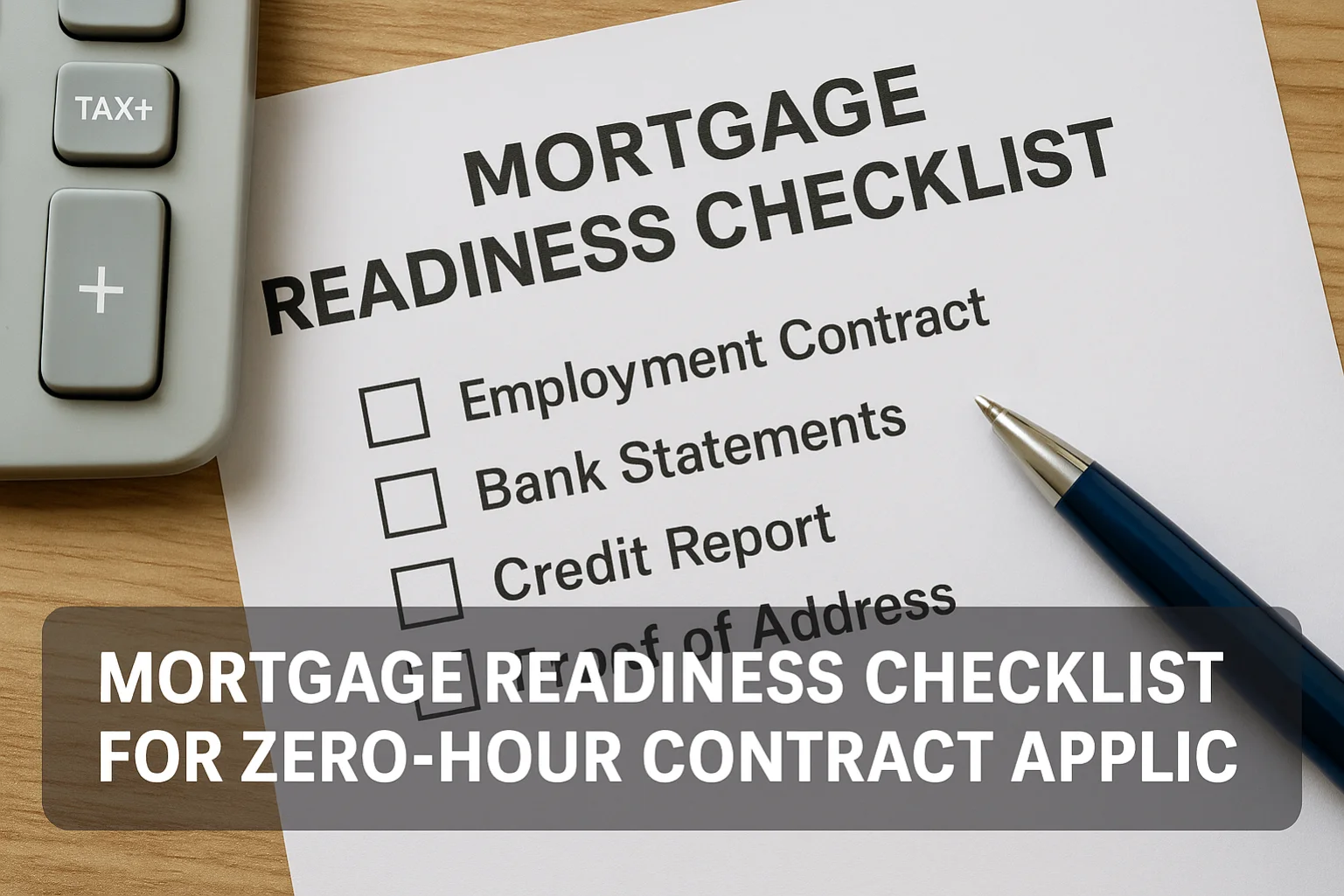
Before you apply, make sure you have the following ready:
Proof of Income
Employment Stability
Financial Profile
Deposit Ready
Documents
Optional Enhancers
Yes, it's possible, though your options might be more limited. Some specialist lenders accept applications from those with bad credit, especially if you've shown improved financial habits recently. You'll typically need a larger deposit and clear evidence of stable income.
Most lenders prefer at least 6–12 months of continuous employment on a zero-hour contract. The longer your work history, the better your chances of approval.
Typically, lenders require a 5–10% deposit. However, some may ask for a higher deposit (up to 15–25%), especially if they perceive your employment situation as higher risk.
Not necessarily. While some specialist lenders may offer slightly higher interest rates, many mainstream lenders offer competitive rates if you meet their standard criteria. Shopping around with the help of an expert broker can help secure the best possible deal.

“Being on a zero-hour contract doesn’t mean you’re locked out of homeownership. With the right paperwork and lender, we’ve helped hundreds of clients turn uncertainty into approval it’s all about how the story is presented.” – Will Sharman
Securing a mortgage with a zero-hour contract doesn’t need to be stressful. Our expert advisors specialise in placing clients with non-traditional income streams:
If you're on a zero-hour contract and want clear, expert advice, get in touch with Mortgage Broker Near Me today. We're here to help you unlock your homeownership dreams.

Getting a mortgage right now feels harder because lenders keep changing their rules, but most of the barriers people face can be fixed. A “no” from one lender does not mean you cannot get a mortgage. Income rules vary, credit score rules vary, and each lender calculates affordability differently. A good broker checks everything upfront, matches you to the right lender, and fixes issues before they become problems. If you want to know what you can borrow without guessing, speak to MBNM.
Read Article
What Are the Benefits of Using a Mortgage Broker in Scotland?
Read Article
There is no fixed salary or deposit rule for a high-value mortgage. See how affordability, income structure and loan-to-value affect what you may be able to borrow.
Read ArticleIf you’re buying, moving, or remortgaging, speak with a MBNM adviser and get clear guidance on what’s realistically available to you, before you commit to anything.
Near you, no matter where you are.
Appointed Representative of The Right Mortgage Network (FCA No. 1004260). Company No. 15189091. Registered in England and Wales.


